

IndiGo Airlines: The Inspiring Story of India’s Biggest Airline

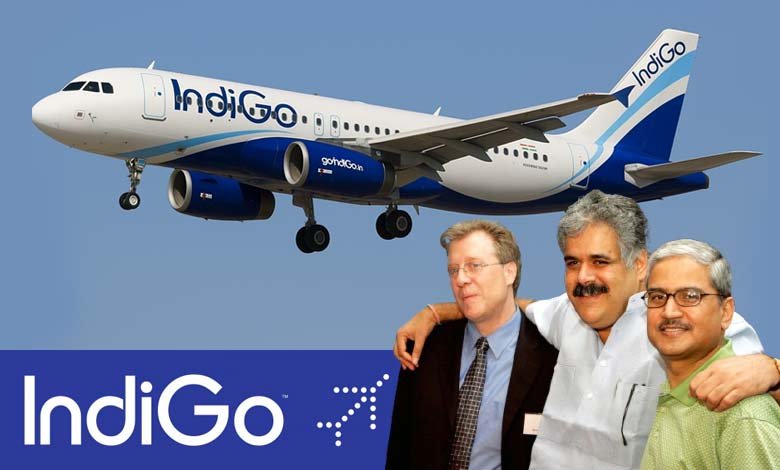
IndiGo Airlines is not just an airline today—it is a symbol of India’s growth, discipline, and smart business leadership. When IndiGo took off in 2006, nobody imagined that this small start-up airline would one day rewrite the entire history of Indian aviation. But within just 18 years, IndiGo became India’s largest airline and also the sixth-largest airline in the world in terms of passenger volume.
How did a young airline beat giants like Air India, Jet Airways, and Kingfisher Airlines—companies that had already ruled the skies for decades? What made IndiGo so successful that it remained profitable even when the aviation sector was going through massive losses?
This blog explains the complete story of IndiGo Airlines—its beginning, founders, business model, strategy, achievements, failures, and the lessons we can learn from its journey.
The Birth of IndiGo Airlines (2006)
The story begins in 2006, when two visionary leaders—Rahul Bhatia and Rakesh Gangwal—laid the foundation of IndiGo Airlines. At that time, the Indian aviation sector was like a stormy ocean. Big players like Jet Airways, Air Deccan, and the newly launched Kingfisher Airlines were already competing fiercely.
Many experts laughed at the idea of another airline entering such a risky market. Aviation had already destroyed the fortunes of many entrepreneurs. People thought:
“If big airlines are struggling, how will two people with a new idea survive here?”
But Rahul Bhatia and Rakesh Gangwal did not dream of becoming the biggest.
They dreamt of becoming the smartest.
And that changed everything.
The Visionaries Behind IndiGo
- Rahul Bhatia — The Man with Ground Expertise
Rahul Bhatia owned InterGlobe Enterprises, a well-known company in travel and logistics. He understood how travel businesses work, what customers want, and how to manage large operations efficiently.
- Rakesh Gangwal — The Man with Aviation Expertise
Rakesh Gangwal was an aviation industry veteran from the United States. He had deep experience working with United Airlines and US Airways.
Together, these two created a perfect combination:
business intelligence + aviation intelligence.
They did not rely on luck.
They built IndiGo on strategy.
The Indian Aviation Scene in the 2000s
To understand IndiGo’s success, we must look at India’s aviation scenario in 2005–2010:
- Kingfisher Airlines launched with glamor, luxury, and huge spending. It became popular but drowned under its own expenses.
- Jet Airways was the premium airline leader but struggled with high debt and over-expansion.
- Air Deccan tried to offer cheap flights but lacked strong financial and operational structure.
- SpiceJet and others were small players trying to find space in a crowded market.
By 2007, every major airline was suffering heavy losses:
- Kingfisher: ₹480 crore loss
- SpiceJet: ₹132 crore loss
- Jet Airways: ₹423 crore loss
- Even IndiGo initially: ₹234 crore loss
Then came the biggest shock—fuel price explosion.
Aviation fuel jumped from $76 to $132 per barrel.
Airlines drowned.
Cash dried up.
Operations collapsed.
But amidst this crisis, a twist happened…
IndiGo’s First Big Breakthrough
While other airlines were falling deeper into losses—
IndiGo recorded its first major profit:
₹82 crore profit in 2008.
And this profit did not stop.
It grew by 400%, reaching ₹484 crore in the following years.
Everyone was shocked.
How did an 18-month-old airline become profitable when 90-year-old Air India was drowning?
Why did giants like Kingfisher and Jet Airways shut down while IndiGo kept flying higher?
The secret was not luck.
It was strategy.
The Core Problems of Indian Aviation
IndiGo understood three major challenges of the Indian aviation industry better than anyone else:
- Aviation Fuel (ATF) Costs
Fuel accounts for 35–50% of an airline’s total cost, and airlines cannot control its price. Any rise in fuel price can destroy an airline’s profitability.
- Indian Customer Behaviour
Indian travelers are extremely price-sensitive.
Even a ₹200 difference in ticket price changes their decision.
So airlines must keep tickets cheap but still make profits.
- High Operational Costs
Running an airline involves:
- buying aircraft (thousands of crores)
- maintenance
- repairs
- salaries
- airport charges
- ground operations
One small inefficiency can lead to massive daily losses.
IndiGo solved all three problems with smart ideas.
IndiGo’s Business Model — “Simple, Smart & Efficient”
IndiGo built a business model based on simplicity and efficiency, designed especially for Indian customers.
The founders created a 5-Point Strategy that became the backbone of IndiGo’s success:
- Cutting Fuel Cost Through Smart Techniques
IndiGo saved fuel in ways no other Indian airline had imagined.
a) Flying Without Ovens
IndiGo does not serve hot meals because it does not use ovens on aircraft.
- One oven weighs 20 kg
- A typical aircraft has 3 ovens
- IndiGo removed all 3 → 60 kg weight saved per flight
Lower weight = lower fuel use.
IndiGo operates 7 lakh flights per year.
Savings from removing ovens = almost ₹400 crore annually.
b) Female Cabin Crew for Weight Efficiency
This is not gender bias—it is weight management.
- Average male cabin crew weight: 75 kg
- Average female cabin crew weight: 50 kg
Difference = 25 kg per person
4 female crew vs. 4 male crew
→ 100 kg reduction per flight
100 kg saved per flight x 7 lakh flights
= 14 lakh extra passengers transported at same fuel cost
c) Single-Engine Taxiing
Most airlines use both engines while taxiing (moving on the ground).
IndiGo uses only one engine.
Benefits:
- 20% less fuel burned
- 40% less CO₂ emission
Savings:
- ~₹7,500 saved per flight
- Across 7 lakh flights → ₹525 crore saved per year
This is smart aviation economics.
- Reducing Turnaround Time to 30 Minutes
Turnaround time =
The time from landing → unloading → cleaning → boarding → takeoff.
Most airlines: 45–60 minutes
IndiGo: 30 minutes
This means IndiGo can operate more flights with the same aircraft, earning more revenue.
For example:
Reducing 10 minutes per flight =
200 extra flights per year, generating huge additional revenue.
This “on-time performance” made IndiGo one of the world’s most punctual airlines, with an 83% on-time record in 2022.
- A Young Fleet of Aircraft
IndiGo always uses new aircraft.
Benefits:
- less fuel consumption
- fewer maintenance issues
- lower repair cost
- higher safety and reliability
When IndiGo began in 2006, India had only 305 total aircraft across all airlines.
Today, IndiGo alone has 406 aircraft with orders for 900 more.
- Smart Staffing — Efficient Teams, Not Large Teams
Staff per aircraft:
- Air India: 250+ employees per plane
- Jet Airways: 180 employees per plane
- IndiGo: 96 employees per plane
IndiGo achieved this by:
- multi-tasking staff
- automation
- clear processes
- no unnecessary roles
- strict performance culture
This saved hundreds of crores every year.
- Discipline in Leadership
The biggest strength of IndiGo is its leadership.
Aditya Ghosh – The Man Who Built IndiGo
From 2008 to 2018, Aditya Ghosh served as IndiGo’s President.
He focused on:
- low profile
- high performance
- teamwork
- operations
- discipline
While CEOs of other airlines were busy with glamour, media, and VIP culture, Aditya quietly built IndiGo into a world-class airline.
Under his leadership:
- IndiGo scaled from a small airline to India’s largest
- maintained profits for 10 continuous years, a rare achievement in aviation
- became the most efficient airline in the country
How IndiGo Overtook 90-Year-Old Air India
Air India was huge, experienced, and government-backed.
But it suffered from:
- overstaffing
- slow operations
- bureaucratic decision-making
- outdated aircraft
- low on-time performance
IndiGo used:
- young planes
- fast processes
- rigorous training
- strict cost control
- data-driven strategy
While Air India focused on luxury and legacy,
IndiGo focused on discipline and simplicity.
And that made all the difference.
Why Kingfisher and Jet Airways Failed While IndiGo Succeeded
Kingfisher’s Mistakes
- extreme luxury
- unnecessary expenses
- high salaries
- glamorous marketing
- poor financial discipline
Kingfisher was like a flying lounge.
Beautiful—but unsustainable.
It shut down in 2012, and Vijay Mallya fled India.
Jet Airways’ Mistakes
- heavy debt
- premium services despite a price-sensitive market
- poor cost management
- complicated processes
Jet Airways collapsed after years of financial stress.
IndiGo’s Discipline
IndiGo avoided:
- glamour
- expensive lounges
- unnecessary services
Instead, it focused on:
- cheap tickets
- on-time flights
- maximum efficiency
This helped it survive where others collapsed.
IndiGo’s Success in Numbers
- 65% market share in India
- 12 crore annual passengers
- 400+ operational aircraft
- 900 aircraft on order
- World’s 6th largest airline by passenger volume
- 10 consecutive profitable years
IndiGo is not just an airline anymore.
It is an empire.
Lessons We Can Learn from IndiGo’s Success
IndiGo’s story teaches powerful lessons not only for businesses but also for personal life.
- Build Strong Foundations
Before flying high, strengthen the basics.
IndiGo didn’t chase luxury.
It focused on:
- processes
- operations
- cost control
Strong roots → strong results.
- Small Savings Become Big Profits
Every rupee saved is a rupee earned.
Removing ovens, reducing weight, single-engine taxiing—
small ideas saved hundreds of crores.
In life too, small habits create big results.
- Simplicity Wins
Kingfisher and Jet tried to be fancy.
IndiGo kept things simple and practical.
Not everything that looks premium is profitable.
- Leadership Matters
A strong leader can lift an organization.
A weak leader can sink even the strongest brand.
IndiGo succeeded because of clear vision, discipline, and humility.
- Consistency Beats Competition
IndiGo’s real power is consistency:
- on-time performance
- clean aircraft
- polite cabin crew
- reliable service
Simple service, delivered well, again and again.
IndiGo: The Airline That Changed India
Today, IndiGo is not just a carrier transporting passengers.
It is a major force pushing India’s:
- economic growth
- tourism
- global connectivity
IndiGo symbolizes a new India—
efficient, modern, disciplined, and unstoppable.
From two people with a dream in 2006…
to carrying 12 crore passengers today…
IndiGo has truly changed Indian aviation forever.